
Enhancing battery performance through advanced powder processing
Rapid growth in electric mobility and consumer electronics is driving strong demand for high‑performance batteries. At the same time, manufacturers must meet expectations for faster charging, longer lifetime, higher energy density and lower costs. As a member of the Hosokawa Group, Hosokawa Micron supports both established and emerging battery producers with efficient powder processing technologies that help balance performance, reliability and sustainability.
Global market shifts, including nearshoring and stricter environmental targets, are accelerating the rise of new battery manufacturers, particularly in Europe. Hosokawa Micron and its sister companies provide equipment for multiple stages of battery production, from drying and milling to classification, spheroidizing, mixing, coating and containment, suitable for industrial production as well as R&D environments.
Flexible drying of cathode precursors
Drying and pre‑milling of cathode precursor materials such as nickel, manganese and cobalt oxides is a key processing step. Hosokawa Micron’s DMR flash dryer enables continuous drying of both slurries and filter cakes, achieving residual moisture levels below 1%. Integrated classification ensures consistent product quality, while efficient dispersion increases evaporation rates, reducing energy use and plant footprint.
For applications requiring extremely low moisture levels or smaller throughput, batch solutions such as vacuum dryers are available. For challenging volatiles, conical paddle dryers combine high temperatures with full vacuum to achieve moisture levels in the low ppm range.
Ultra‑fine milling and graphite spheroidizing
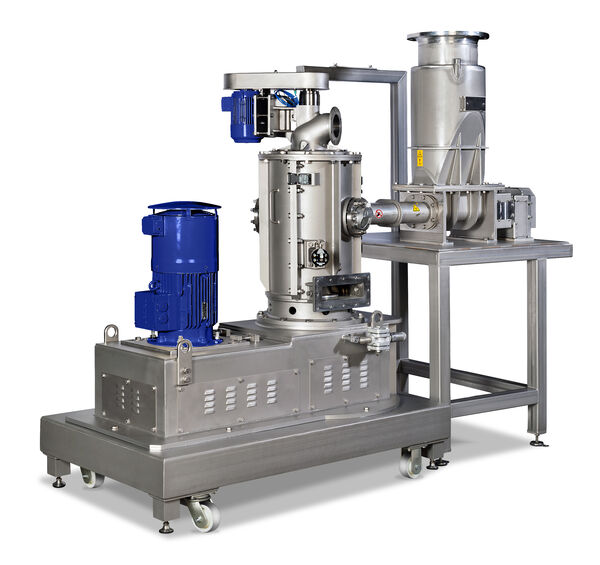
Precise particle size control is essential for battery performance. Ultra‑fine milling increases surface area, improving electrochemical activity, charging speed and service life. Hosokawa Micron supplies air‑classifying and jet milling systems capable of producing very fine, narrow particle size distributions for both cathode and anode materials, including graphite and silicon.
To further enhance anode performance, specialized systems are available for graphite spheroidizing. Rounding flaky graphite particles increases bulk density and wettability, allowing higher material loading and energy density. Dedicated machines process both natural and synthetic graphite efficiently, reducing energy consumption, plant complexity and operating costs. Optional ceramic wear protection minimizes contamination and ensures high product purity.
Mixing, coating and validation
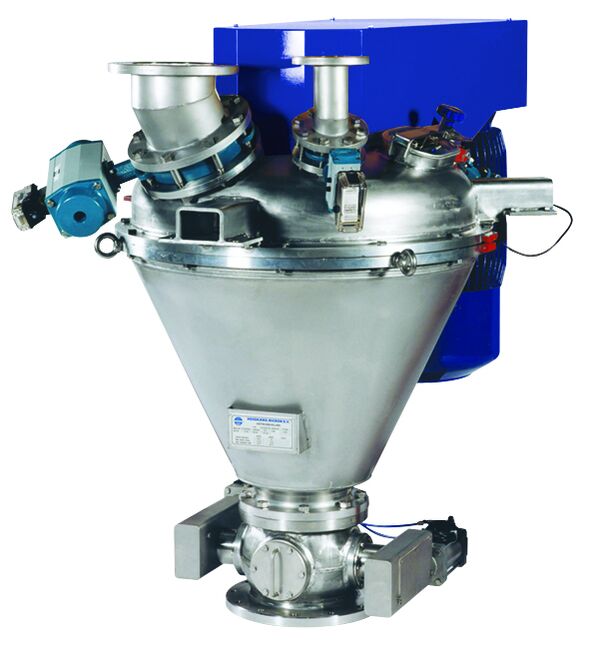
Fine powders often require controlled shear during mixing to prevent adhesion and ensure uniform coating with carbon black and binders. High‑intensity batch and continuous mixers provide homogeneous blending and improved conductivity, while ultra‑high‑shear systems can mechanically bond coating particles to the host material. Where gentle handling is sufficient, conical mixers offer efficient homogenization with low energy input. Wear‑resistant linings are available across the range to protect sensitive materials.
Given the complexity of battery production, Hosokawa Micron emphasizes a “test before you invest” approach. Customers can conduct trials at the company’s test facilities or evaluate equipment under realistic conditions using loan units or substitute materials.
Safety and R&D support
All Hosokawa Micron equipment complies with stringent European safety standards, including ATEX and CE. Depending on material properties and required occupational exposure levels, containment solutions such as downflow booths, split butterfly valves or isolators are provided—an important consideration for solid‑state batteries produced under extremely dry conditions.
The Hosokawa Group also supplies lab‑scale systems for research applications, supporting ongoing innovation in conventional and solid‑state battery technologies. With extensive experience in global battery projects, Hosokawa Micron continues to help manufacturers optimize processes as the market evolves.
Recommend article