
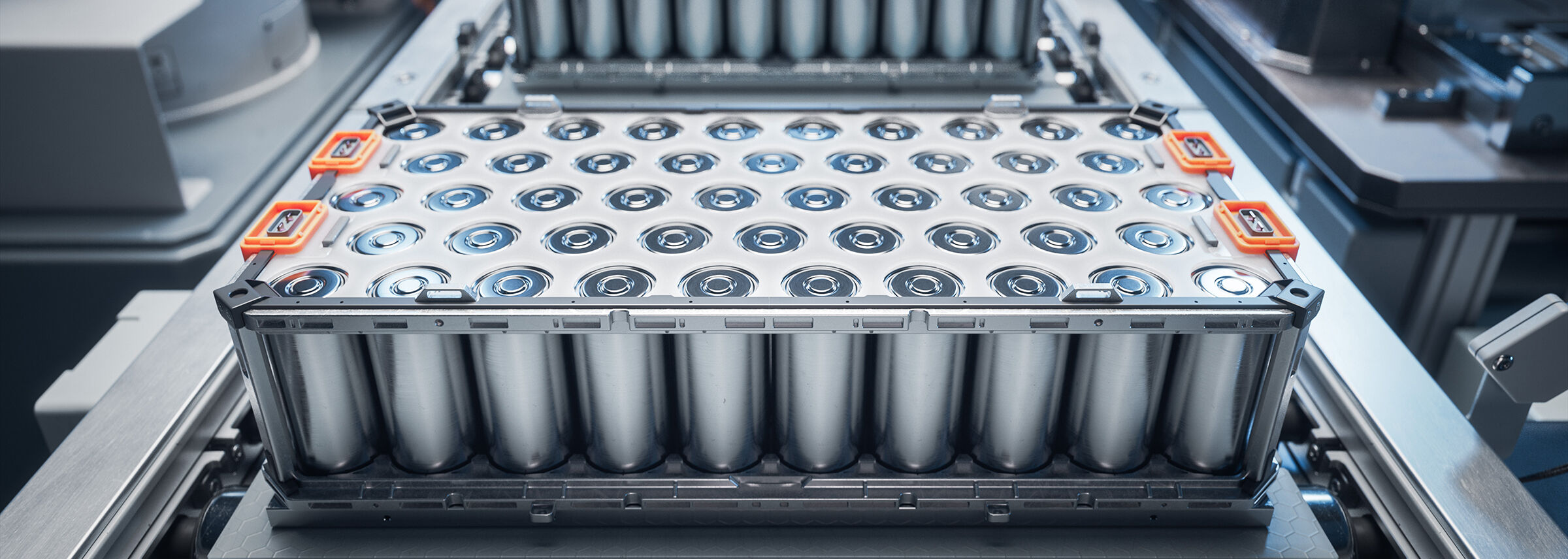
Silicon anode technology for batteries
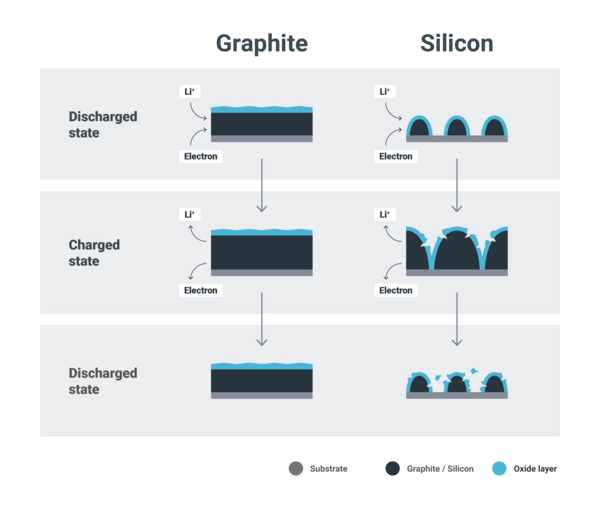
The battery industry still relies heavily on graphite as an anode material. However, there are now promising alternatives - one of which is silicon. This chemical element has a number of advantages over pure graphite:
- up to 10 times higher storage capacity of lithium ions than graphite, therefore longer range possible for electric vehicles
- up to 90 % faster charging
- Lower discharge potential than with a pure graphite anode
However, silicon also has a serious disadvantage: pure silicon anodes change their volume during charging and discharging and can expand up to four times. However, this disadvantage can be countered by using suitable technologies.
Silicon as an anode material: Current technologies
Silicon processing: fine grinding with AFG jet mill and ATP classifier
The Hosokawa Micron Group has developed an advanced process for the grinding of silicon with a combination of the AFG fluidised bed opposed jet mill and the ATP air classifier. This process offers a number of advantages:
- Ultrafine powder for optimum battery performance
- Grinding and classifying in one machine
- High degree of automatisation
- Steep particle size distribution
- Sharp and easily adjustable precision of fineness
- Contamination-free grinding
- Grinding under nitrogen or pressure shock resistant
- Wear protection with PU or ceramics
Silicon grinding with Pulvis agitated media mill: An energy-saving alternative?
There is a second process by Hosokawa Micron to grind silicon as an anode material for batteries. It involves the Pulvis agitated media mill and has a decisive advantage over the AFG/ATP process: It is much more energy-efficient.
- Up to 40% energy saving compared to jet milling
- Steep particle size distribution and sharp top cut
- Wear protection with ceramics
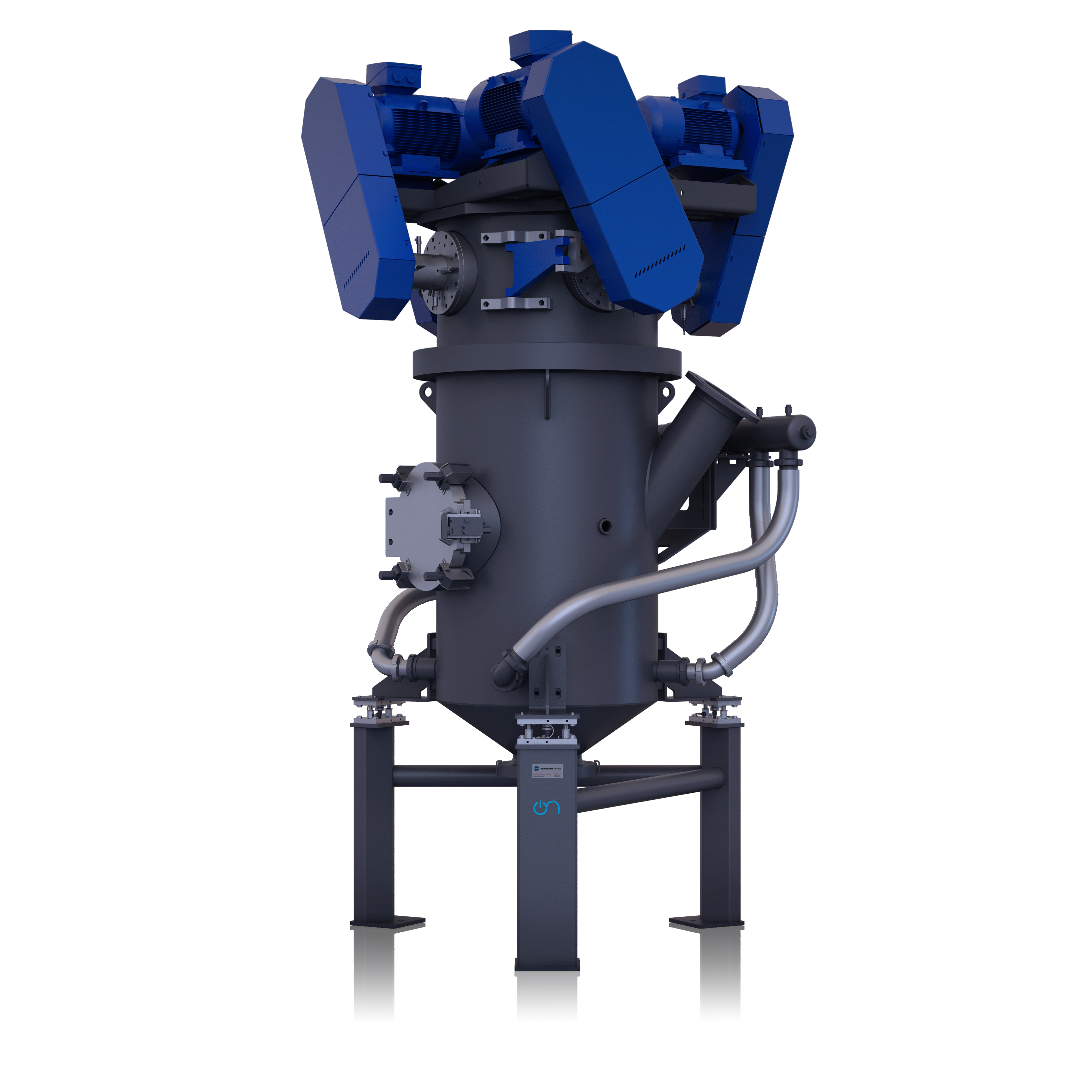
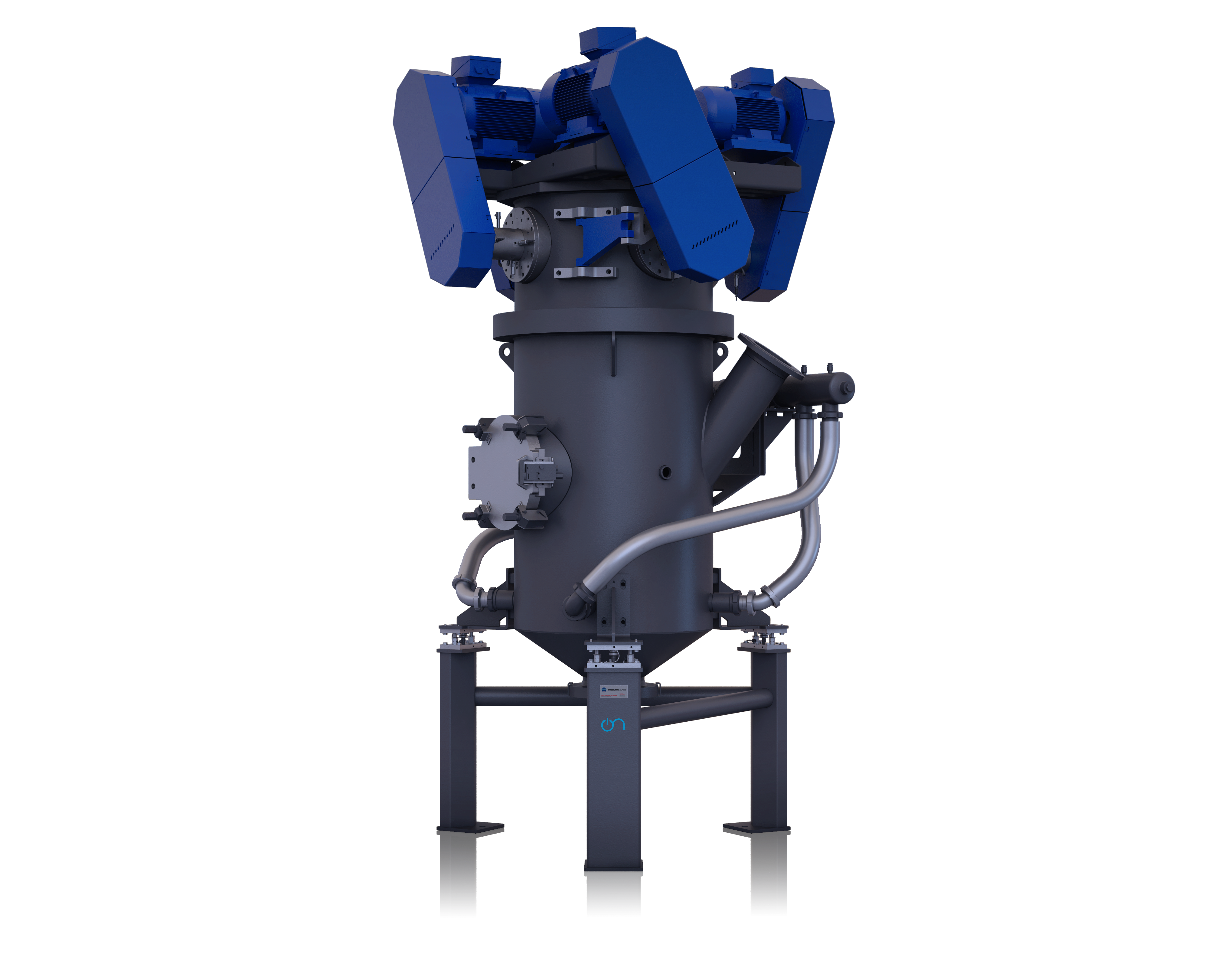
AFG Fluidised Bed Opposed Jet Mill
The AFG fluidised bed opposed jet mill is used in various process steps during battery manufacturing. It is used for the production of powders with a steep particle size distribution and sharp top size limitation in the range < 5 µm to 200 µm.
Applications
- Grinding of lithium and lithium compounds
- Grinding of silicon and silicon compounds
- Grinding of rare earths (with highly flammable properties)
- Delamination: separation of cathode material from aluminium foil or anode material from copper foil
Principle of operation
Jet mills are impact mills which are used to achieve maximum fineness values at maximum product purity. Such particle sizes can only be achieved in connection with an air classification process step . Fluidised bed opposed jet mills are equipped with a dynamic deflector-wheel classifier.
In a fluidised bed opposed jet mill, the product is fed via a feed lock. A product fluidised bed then forms in the grinding chamber, which is fluidised by the gas jets. From there, the particles enter the gas jets and are accelerated. They collide with each other again and again and are thus comminuted. A classifier wheel rejects those particles that are still too large and conveys them back into the fluidised bed. The particles that are fine enough are separated from the grinding gas by a separator or dust filter.
The fineness of the product is adjusted via the speed of the classifier wheel. All-important is a high product loading of the nozzle jets in order to obtain a high particle concentration and thus high impact probabilities. The unique Megajet nozzles were specifically developed for this purpose. The product level in the machine is controlled by load cells or by monitoring the current loading of the classifier drive.
Your advantages with the AFG fluidised bed opposed jet mill
Production of active cathode and anode materials
- Wear protection with different ceramics (standard for grinding lithium) : no contamination of the product. In addition, the effort for maintenance and service is reduced and thus also the downtimes.
- Easy accessibility for easy cleaning and maintenance
- Design for contamination-free processing
- Gas- and dust-proof design protects staff and the work environment from toxic lithium compounds and protects the materials from exposure to moisture
- Integrated classifying wheel(s) arranged horizontally in the classifier top section. The results are a steep particle distribution and an exact top cut. These are necessary for optimum coating thicknesses for electrodes.
- When processing silicon and silicon compounds, the system can be run with nitrogen or argon. Due to the lack of oxygen, the silicon cannot oxidize.
Direct recycling of production scrap
- High degree of separation prevents loss of valuable raw materials. The cathode or anode material is very pure and contains no traces of aluminium or copper foil.
- Separation from the foil takes place in the cyclone: no additional classifying necessary
- Gas- and dust-proof design protects the materials from moisture
- If the system has to be operated with nitrogen it can be run in a closed loop. This keeps the loss of nitrogen low and reduces costs.