Conference highlighted strategies to strengthen rare earth supply chain resilience
Rare earth elements remain indispensable for many of the key technologies shaping the 21st century. With major deposits located in countries such as China, the United States, Myanmar, and the Democratic Republic of the Congo, geopolitical developments continue to influence global supply. Against this backdrop, enhancing the resilience of Europe’s supply chains for these critical raw materials was the central focus of the REEsilience Main Event held on 24 March 2026 in Augsburg.
The event took place at the Hosokawa Alpine AG site and brought together experts to discuss practical solutions, with a particular emphasis on recycling permanent magnets containing rare earth elements.
EU-funded project advancing innovation
The REEsilience project, funded by the European Union’s Horizon Europe research and innovation programme and coordinated by the Institute for Precious and Technology Metals at Pforzheim University, aims to strengthen Europe’s supply security for rare-earth-based magnet materials while developing alternative approaches.
“As an active contributor within the rare earth ecosystem, our technological expertise plays an important role in the processing and application of these materials. We were pleased to host this event in Augsburg,” said Michael Kuhnen, CEO of Hosokawa Alpine.
Focus on processing and material performance
Rare earth elements are widely used in high-performance magnets essential for applications such as electric mobility, aviation, wind energy, and medical technology. During the event, it was emphasized that the performance and efficiency of these magnets depend significantly on both the quality of the raw materials and the processing methods applied.
Speakers highlighted the importance of optimizing processing technologies to ensure consistent material quality and improve overall performance.
Rare earth expertise gathered in Augsburg
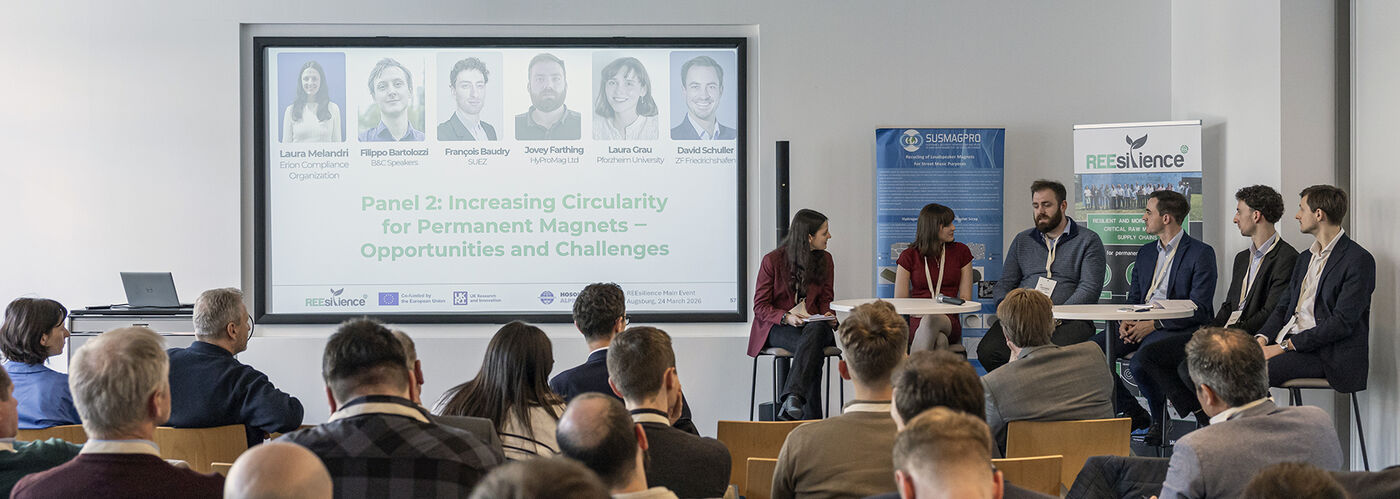
The event brought together selected representatives from industry and politics in Augsburg to discuss current challenges and prospects related to rare earths. The focus was on two panels: one on resilient supply chains for permanent magnets in Europe, and the other on the opportunities and challenges of a stronger circular economy. The event also highlighted recycling and processing solutions for rare earth-containing permanent magnets—an area in which technologies from Hosokawa Alpine, among others, are used. Yener Bicakci, Strategic Sales Manager at Hosokawa Alpine, also contributed to the discussions with his expertise in rare earth processing.
Federica Miccoli from the European Commission (DG GROW) provided further insights with a keynote address on securing critical raw materials for Europe’s green transition. The program was rounded out by presentations on solutions from the REEsilience project and other initiatives. In addition to the technical exchange, the event offered numerous networking opportunities as well as a tour of the Hosokawa Alpine plant. The participants’ shared conclusion: Europe is making progress—but there is still a long way to go before achieving greater independence from China and the U.S.
Recommend article